

For teams waiting on silicon to start testing.
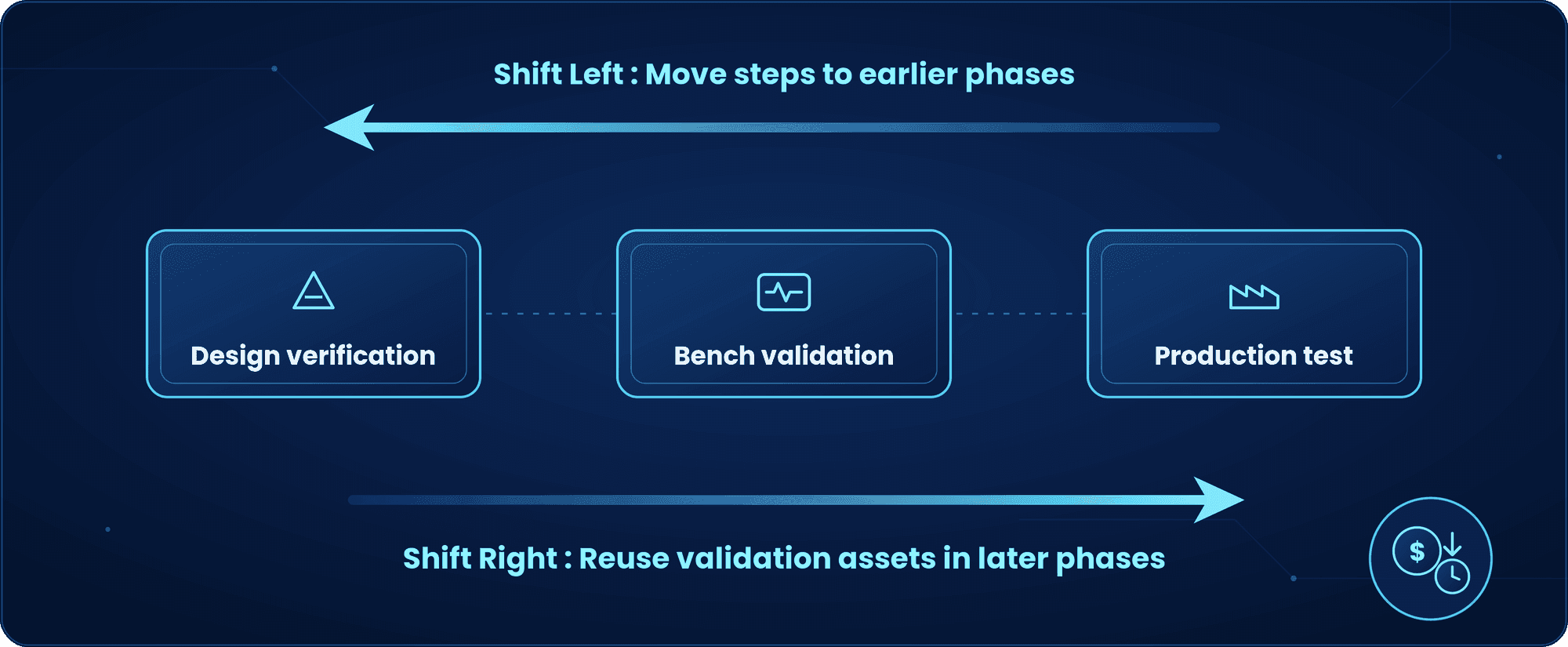
As designs grow more complex, semiconductor teams are looking for ways to get more out of every testing effort: validating earlier in the development cycle (shift left) and reusing validation work in production (shift right), so tests built in one phase pay off in the next. Soliton, with 20+ years in semiconductor validation, builds the frameworks and platforms that make both possible. This page covers the shift left side; the same foundations carry through to shift right.
What is Shift Left Testing?
Shift left testing is a methodology that emphasizes early validation in the development process. By integrating validation activities earlier in the design cycle, teams can identify and address issues sooner, reducing the risk of costly rework later on. This approach not only accelerates the validation process but also improves product quality by catching defects early.
How Soliton enables Shift Left
01
Next Generation Hardware Abstraction Layer (HAL)
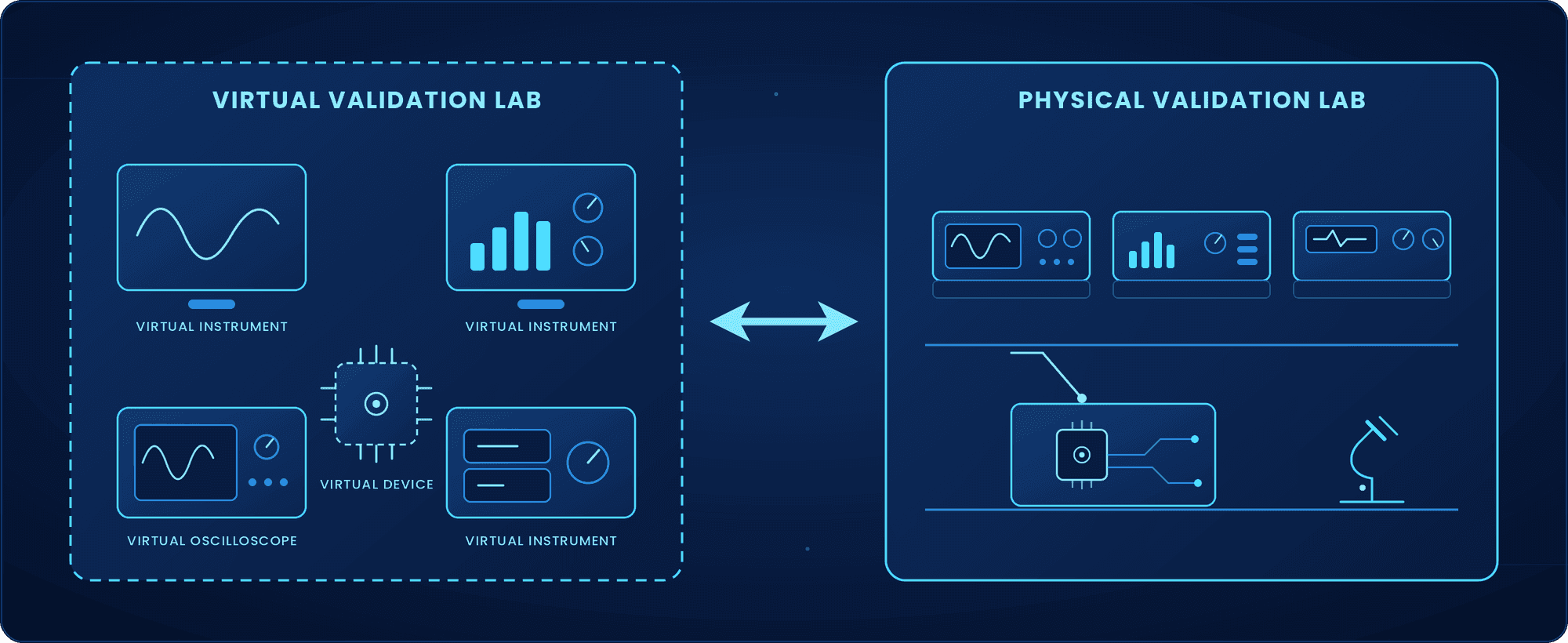
Hardware Abstraction Layer is pretty common in testing frameworks, but Soliton helps develop HAL's that can be used in both simulation and validation phases. This allows teams to use simulated instruments and devices in the early stages of development, enabling early validation and reducing the need for physical hardware. Then, when the hardware is available, the same HAL can be used to validate the hardware, ensuring consistency and reusability across the development lifecycle.

02
Test Program Development
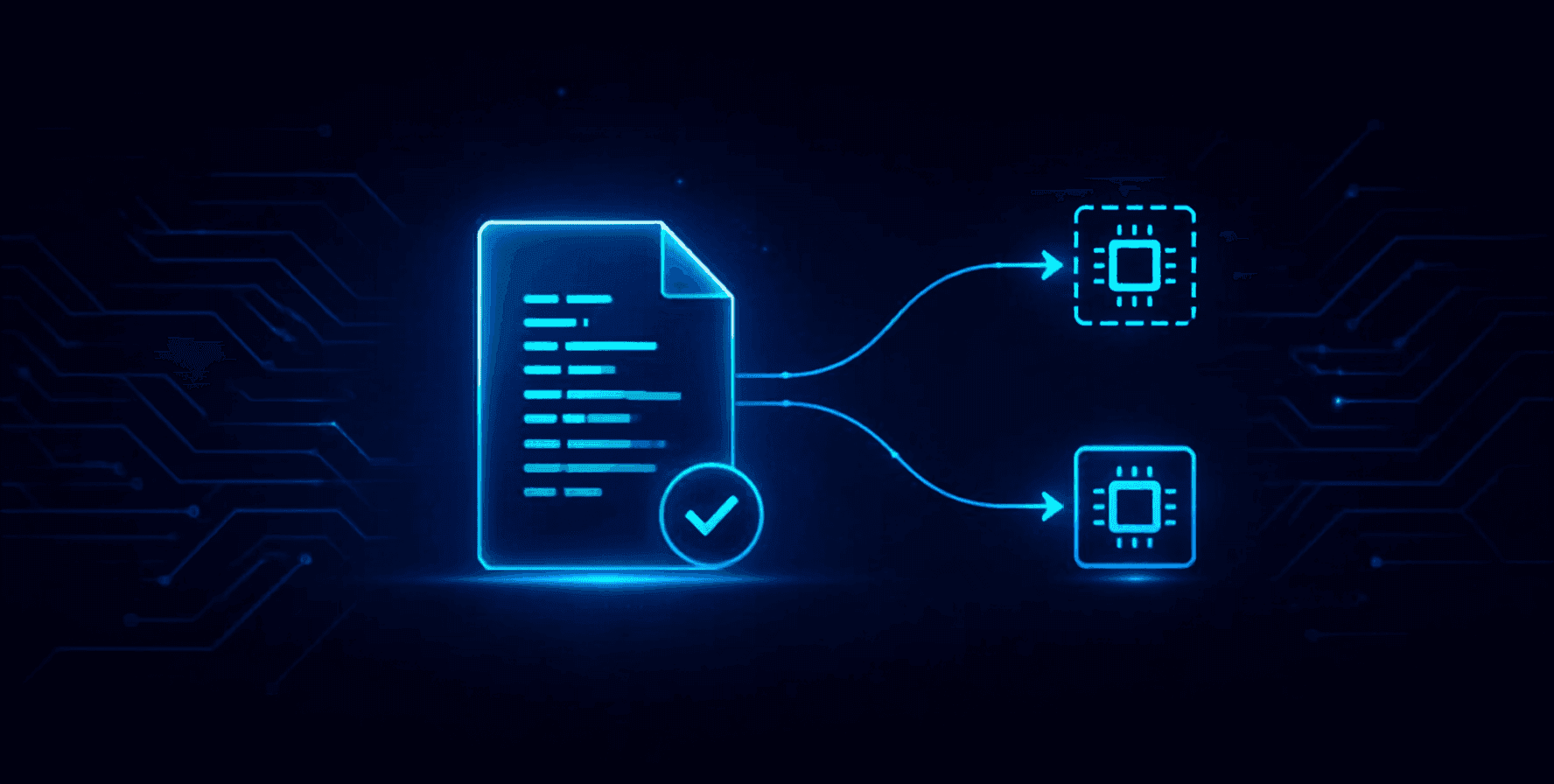
Soliton helps in developing test programs that can be reused across different phases of the product lifecycle. This includes creating test scripts that can be executed in both simulation and validation.
03
Device Under Test (DUT) with Emulation Capabilities
Soliton provides development services for creating DUTs that can be emulated in the early stages of development using FPGA emulators. This allows teams to validate their designs without waiting for physical hardware, enabling faster iterations and reducing time to market.

What shift left changes
The difference shows up the day silicon arrives. Teams that built and debugged their tests against simulation have measured bring-up in hours, not weeks, with first samples reaching their customer within days of the die coming back. Coverage moves the same direction: tests developed without hardware pressure cover more conditions than tests written while the schedule burns.
The savings compound past bring-up. Test components built for simulation carry into the lab, then into applications and production, so the engineering effort spent before silicon keeps paying through phases that used to start from a rewrite.
How can Soliton help with Shift Left Testing?
Soliton develops the test assets that let validation start before silicon exists: HALs, test programs, and emulated devices designed to run in simulation first. That design has to hold across two phases that work very differently:
- Pre-silicon, teams work against simulated instruments and FPGA-emulated devices, because their job is validating the design and proving out the tests themselves before hardware exists.
- Post-silicon, the same teams need those tests running on real instruments and real devices immediately, because their job is finding silicon issues, not re-debugging test code while the schedule burns.
We build HALs, test programs, and emulated DUTs with both phases designed in, so the tests your team debugs in simulation are the tests that run on silicon.