

What is TestOps?
As semiconductor designs grow more complex, traditional post-silicon validation can’t keep pace with demands for faster turnarounds and higher reliability. Validation is no longer a simple checkpoint—it’s a strategic phase that directly impacts product success.
TestOps brings DevOps principles to post-silicon validation, transforming it into an agile, efficient, and collaborative process. By automating workflows, enhancing test coverage, and enabling smarter lab resource use, TestOps helps teams validate chips faster and more thoroughly—reducing time-to-market and improving product quality.
TestOps has two critical sections, one is the Definition, Planning, Analysis and Reporting section that primarily deals with the test specification, planning, analysis and reporting, mostly done on Cloud/on-prem agnostic of the test systems. The other is the Test Program development, Execution, Data Collection section that deals with the development and execution of the test programs, data collection which is done on the test systems with device under test (DUT) and hardware.
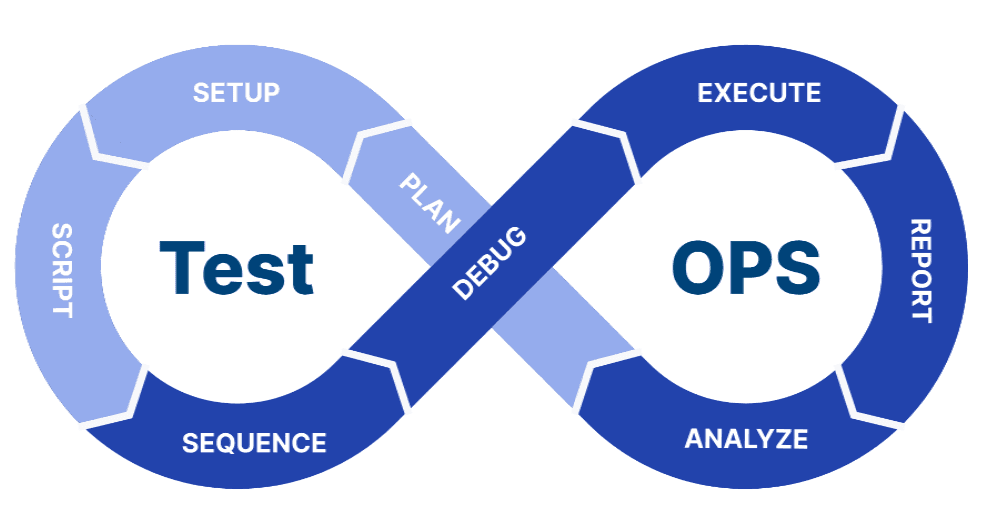
Benefits of TestOps: Specification and Data Management

One thread from spec to result
Every number in your data traces back to the specification it verifies, from the test plan that scheduled it to the bench that produced it.

Compliance evidence generated, not assembled
Reports come from live data on demand, instead of engineers reconstructing evidence from spreadsheets at audit time.

One source of truth across labs and sites
Data stays comparable wherever the test ran, so teams discuss the spec, not whose bench got it right.
Connect your specs, tests, and data.
Every validation result answers a specification. But in most labs, the specs live in documents, the plans in spreadsheets, and the data in whatever format the bench produced, so the thread connecting them is a person's memory. TestOps ties them together: specifications, test plans, execution tracking, measurement data, and reporting in one framework, deployed on AWS, Azure, GCP, or on-prem.
We build it to your workflows, not the other way around. 20+ years inside semiconductor validation means we know the data you collect, the formats it arrives in, and the questions your team needs answers for.
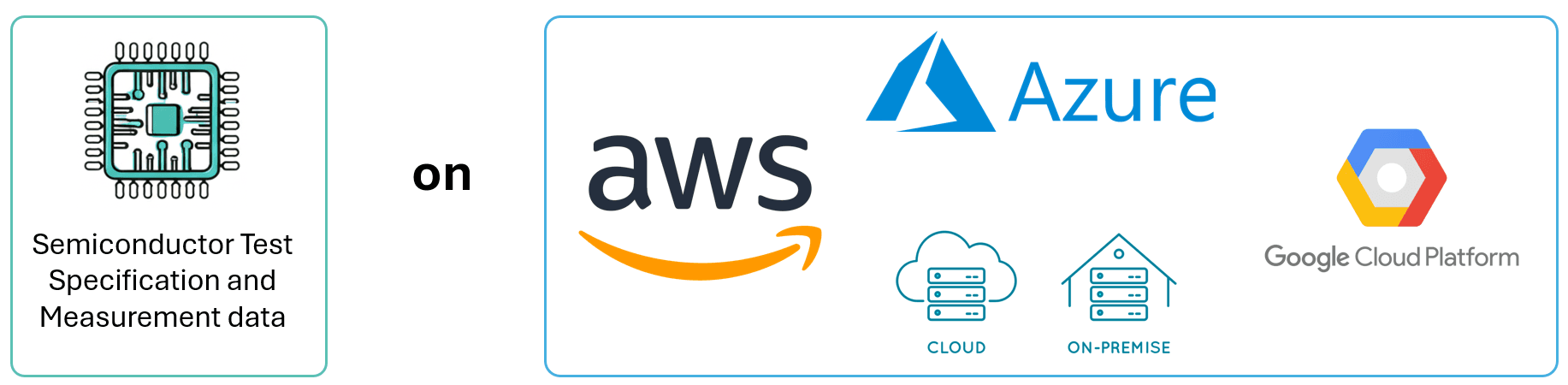
Key Features of TestOps: Specification and Data Management
01
Specification Management
Specs versioned and managed in one system, with every test and result traceable back to the spec it verifies.

02
Test Planning and Execution Tracking
Plan tests, assign them to engineers, and track execution to completion, without chasing status.

03
Data Collection and Analysis
Parametric data, waveforms, and logs collected from your benches and stored in formats built for both storage and analysis.

04
Reporting and Visualization
Results visualized where your team already works, with integrations for Excel, Power BI, Spotfire, and JMP.

05
Collaboration
Real-time updates and shared views, so design, validation, and management read the same numbers.

06
Integration with TestOps Framework
Seamless integration with the TestOps framework for test program development, execution, and data collection, ensuring a unified approach to validation.